From hospital pharmacy to strategic environments and infrastructure via consultancy – Jerry Darby’s career path has remained tied to healthcare. “After getting my MBA I started a career in consultancy, mostly with strategic infrastructure planning. I’ve worked with nearly every one of the top 20 academic medical centers around the USA and have done international work as well,” he begins. The consultancy work led Jerry to Henry Ford Health, which was one of his long-term clients. “Eventually they asked if I would help do some of the strategic planning around a hospital redevelopment project, which took a couple of years. When we achieved the milestone of getting it approved by the board, Henry Ford Health asked if I would like to come join the team.”
This was five years ago, and having taken on that initial project, Jerry is now Senior Vice President – Strategic Environments and Infrastructure at Henry Ford Health. His role extends across facilities, design, construction, real estate, sustainability, and healing arts for the entire Henry Ford Health system. The system, which is based in Detroit and serves communities across southeast and central Michigan, comprises 13 hospitals, around 14 million square feet of space and over 50,000 employees.
“One of the priorities is achieving consistency across the whole network for our construction and processes, ensuring that we are providing the best level of service,” continues Jerry. “Sustainability is also high on the agenda – not just in how we build, but in the wider impact we have on the communities around us. We are establishing a mindset of wanting to create healthier places to live, renewing our campuses through the lens of making the world around us better. We believe sustainability is part of healthcare and if we’re not taking care of the environment while we’re trying to take care of people, it doesn’t work.”
Jerry and his team have an extensive remit across the entire Henry Ford Health network, which underwent a significant expansion in 2024 when it formed a joint venture with Ascension Michigan, adding eight hospitals and hundreds of sites of care to Henry Ford Health organization. “It nearly doubled our size and there’s a lot of work to be done to create consistency across the organization,” Jerry notes.
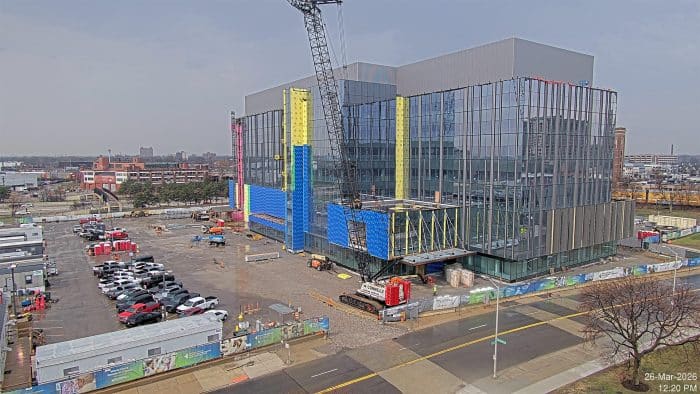
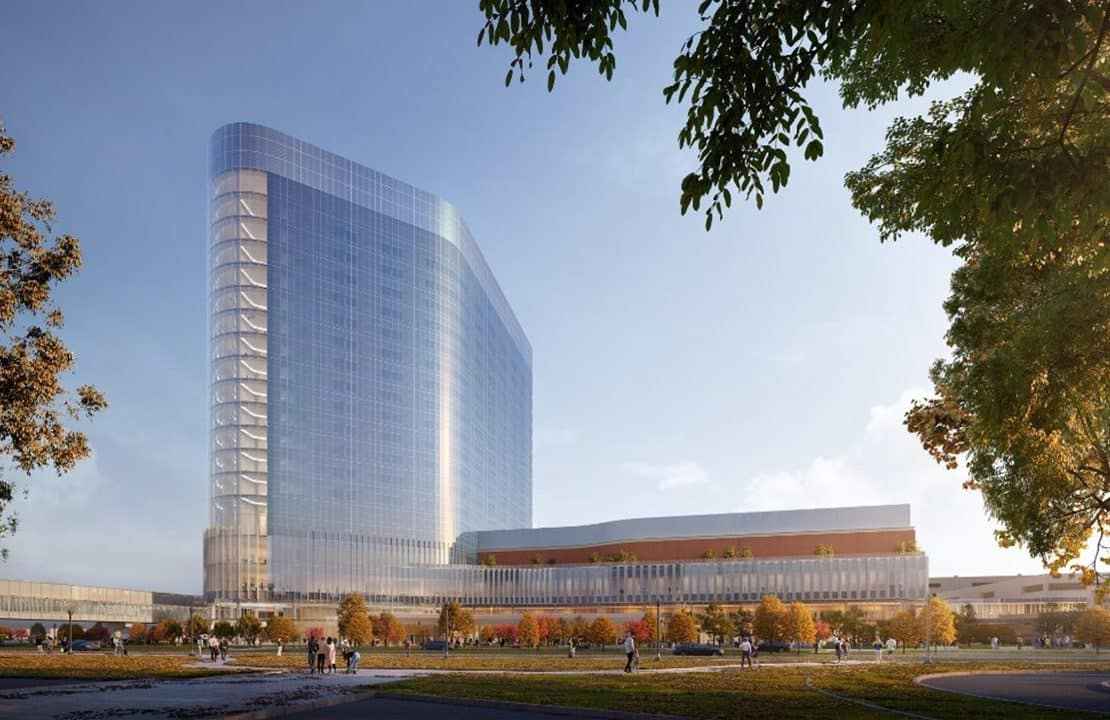
Another transformational project, called ‘Destination: Grand,’ is underway at the health system’s 53-acre campus for academic medicine and specialized care in the heart of Detroit. The system is investing $2.2 billion to expand Henry Ford Hospital on West Grand Boulevard. “That campus is 100 years old and while we’ve done many separate improvements over the years, Destination: Grand is a total transformation. It adds 1.2 million square feet of hospital space, including over 400 private patient rooms, approximately 50 procedure rooms and a new emergency department,” Jerry reveals. “We are also integrating other elements of redevelopment, including improved parking and a new fully electric central energy hub.”
The hospital expansion project is the largest component of the Future of Health: Detroit initiative, a partnership between Henry Ford Health, Tom Gores and the Detroit Pistons, and Henry Ford Health + Michigan State University Health Sciences, a joint research enterprise between the health system and university.
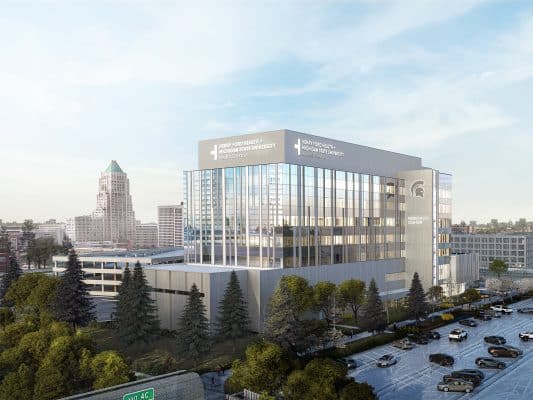
Steps away from the new hospital building, Michigan State University is funding the construction of the Henry Ford Health + Michigan State University Health Sciences Research Center, a 335,000 square-foot medical research facility that will house more than 80 research teams.
To complement the hospital and research developments, Future of Health: Detroit also features state-of-the-art residential, commercial, retail and recreational components, led and financed by Gores and the Detroit Pistons Organization.
“The Detroit Pistons’ multi-phase, multi-year plan preserves the history of the neighborhood and includes market-rate and affordable housing, and publicly accessible retail space,” adds Jerry.

“I’ve been part of massive developments all around the world, and, to me, this is the most impactful healthcare project that I’ve ever seen. Detroit has struggled and while it is improving and advancing, it is extremely rewarding being involved in something you know is going to have a massive impact.” Jerry also values being involved beyond the planning stage. “As a consultant I would help make big decisions and then leave, whereas now I am an employee, and part of the community, I see the results of the program development.”
Ultimately, the decisions made for Destination: Grand are driven by the experiences it will deliver for patients and the wider community. Thinking of patient care as part of infrastructure means thoughtfully creating green spaces outside the hospital that complement the care provided inside the hospital. “We’re creating more than six acres of green space around the new hospital – this will be a significant addition to Detroit. Green walkways will connect our buildings, and a third-floor patio veranda will give patients access to fresh air and views. Outlook is very important,” adds Jerry. “We want patients to see something that can positively influence their recovery, so the orientation of those spaces is critical.
“We have patient groups that we interacted with early in the planning processes before we even had the vision. We also had community meetings to ensure that what we’re doing in this hospital is truly organized around people. Healthcare puts people in a lot of vulnerable and emotional situations,” he continues. “We want to make visiting or staying is as comfortable and as seamless as possible.”
Delivering that seamless patient experience increasingly depends on technology. “We’re now actually getting to the point where we can realize what a true smart hospital is and how it all works together, including the building technologies,” says Jerry. “That can be relatively simple like patients managing their own blinds, temperature and room environment, to much more complicated behind the scenes activities. We are always looking at how our facilities can accommodate new technologies moving forward.”
As Jerry discusses Destination: Grand, a theme that recurs is how collaboration is prioritized – between organizations, partners, the city of Detroit, community and the team. “On a project of this scale there are multiple construction managers, subcontractors, owners and reps, and one of the most important things that we did was form a collaborative delivery model. That includes being incentivized to work as one team, delivering this project together and believing that if one benefits, we all benefit. The culture of working together is really the most important thing for delivering a project of this size and scale.”
Managing such a pivotal project draws on all of Jerry’s leadership skills. “I believe accessibility is key and making sure I listen. Everyone is an expert in what they are doing, and so my role is putting the right people in the room and making sure they have the right conversations.
“Setting expectations up front is also critical, as well as giving real feedback along the way and establishing a process that allows give and take across all the different individuals, both internal and external.
“We are continually looking at how we’re going to work together as a system. Going forward, our priority remains creating a seamless system that can impact the healthcare of the entire population we serve,” he concludes.
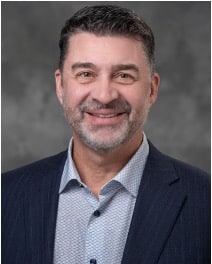
Jerry Darby
Senior Vice President – Strategic Environments and Infrastructure, Henry Ford Health Systems
Destination Grand represents more than a transformative healthcare expansion; it reflects the power of partnership and a bold investment in Detroit’s future. Barton Malow–Turner–Dixon (BTD), in association with Gayanga, is proud to help deliver this 1.2 million-square-foot expansion for Henry Ford Health. The 20-floor patient tower will feature 432 all-private, high-tech patient rooms, expanded emergency services, and 28 advanced operating rooms designed to support the most complex care. From early planning through construction, the BTD team’s integrated approach prioritizes collaboration, innovation, and quality—helping bring Henry Ford Health’s vision for the future of healthcare to life.