|
Getting your Trinity Audio player ready... |
The first job Adrian Cortes ever had was at Wawa, working as a sixteen-year-old in 1996, and he wasn’t even allowed to cut lunch meat at the time.
“I grew up in Camden, New Jersey, where we didn’t have Wawa stores—we had bodegas,” he recalls. “When my family moved to the suburbs, I saw a Wawa for the first time and was intrigued by the brand. At that time, Wawa had Taco Bell, Pizza Hut, and Dunkin’ Donuts inside their stores, so my first impression was that it was this interesting mix of national brands.”
Little did Cortes know that decades later he would become manager of architectural design at the beloved East Coast convenience store chain that combines fresh made-to-order food, coffee, fuel, and community focus under one roof.
“I’ve always enjoyed creating spaces that become part of people’s everyday life or journey,” he explains. “While I was working part-time at Wawa, I studied architecture [at Pennco Tech-Blackwood] and worked at an architecture firm. I designed schools, retail spaces, grocery stores hospitality projects and even correctional facilities.”
After 2008, when the economy hit architecture firms hard, Wawa was slowly building and steady despite the state of the economy. Cortes returned to the retailer in 2013 as a project manager and worked his way up to a manager of architecture design.
In this role, Cortes led several key initiatives central to the company’s growth and transformation.
“I was charged with leading the store design team, developing and overseeing prototypes and designing new formats,” says Cortes, who has since stepped away from his role at Wawa for new opportunities. “For instance, Wawa just opened a new travel center format in North Carolina, with more on the way. It’s about 8,300 square feet to serve professional drivers and travelers. It’s not our main model, but it’s an important gateway for consumers to experience the brand in new markets.”
Cortes is also proud of two recent remodels, noting they were used as testing platforms to validate Wawa’s new kitchen design before rolling it out broadly.
“The early data showed our concept worked, so we moved it into the pipeline,” Cortes explains. “It was about hitting the reset button—reestablishing adjacencies, deploying labor to the right locations, and enabling growth while maintaining operational efficiency and brand consistency across markets.”
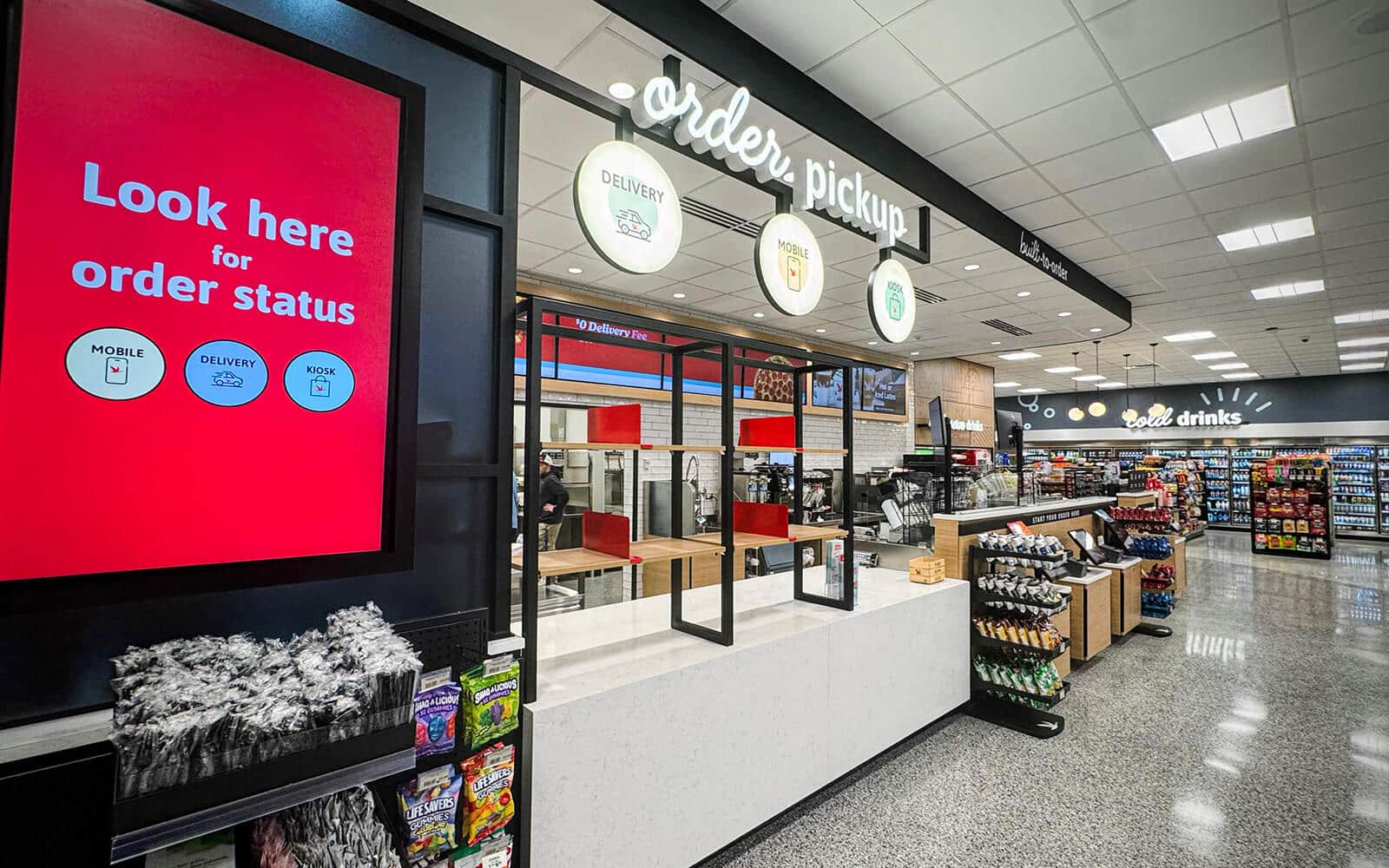
One of his biggest challenges came when COVID hit, and customers shifted to online ordering and pickup during the pandemic.
“That expectation didn’t go away, so we had to redesign our prototype to meet that demand,” he shares. “Our current prototype had reached the end of its life cycle and there was no room left for growth or new initiatives.”
The puzzle then became designing a store that can handle in-store orders, online orders, and third-party pickups all simultaneously while still feeling like Wawa.
“Wawa is a little bit of everything—Dunkin’, Smoothie King, Starbucks, Domino’s, Burger King—all in one box, plus gasoline and EV charging,” Cortes says. “The challenge was creating a format that accommodates all of that.”
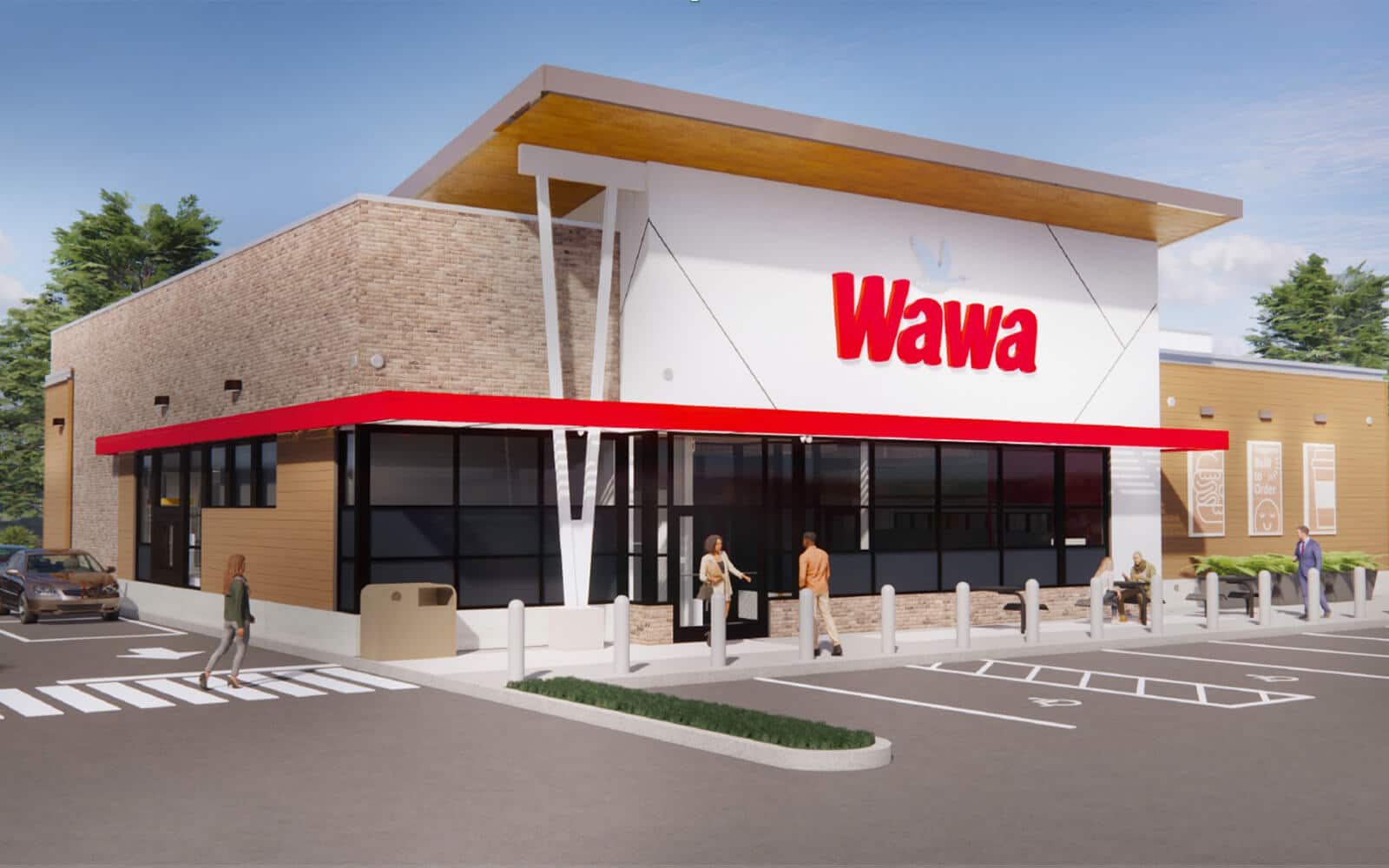
That led to the design of Wawa’s next-generation prototype, which will guide growth in every new market. When Cortes joined Wawa, the company had just entered Florida with a new prototype designed specifically for the Southeast. Meanwhile, it had a different prototype for the Mid-Atlantic region. The prototype will enable customers to enjoy Wawa via Mobile Pickup and Wawa FlyThru Lane.
“Managing that portfolio was extremely challenging,” he reveals. “We hit the reset button with a universal prototype that could be adapted across states, which laid the foundation for the next-gen design. It’s designed to meet evolving consumer behaviors, including online ordering, in-store pickup, and third-party deliveries.”
He credits his diverse team of licensed architects who are very technical, designers who know how to stay within the box, analysts who provide data-driven insights and project managers who keep everything on schedule with the success he has seen.
“I’ve always enjoyed creating spaces that become part of people’s everyday life or journey.”
Adrian Cortes
Even with strong teams in place, a successful expansion of offerings brings new operational challenges. How do you not only keep up but also stay ahead of growth? How do you build a foundation that allows teams to quickly adapt while delivering the same warmth and convenience that customers expect?
Cortes says this led to a complete reevaluation of how design and operations worked together, grounding their approach in four key pillars: flexibility, capacity, labor management, and customer experience.
1. Flexibility
They designed with adaptability in mind so the stores could evolve as the business evolved. Think modular layouts, flexible equipment setups, and forward-thinking design principles that allowed the teams to test and implement new offerings without costly redesigns. “Flexibility became a mindset as much as a design principle,” Cortes says.
2. Capacity
Capacity was critical when adding new service channels and higher customer demand. “Every inch mattered,” he says. “We focused on how to increase throughput and maximize space without increasing the footprint. From kitchen layout adjustments to better traffic flow, the goal was to support both volume and quality.”
3. Labor Management
People are at the center of Wawa’s success, so improving workflow is essential. The teams worked to simplify movement, reduce inefficiencies, and create a space to make work easier and intuitive. “A better layout meant faster service, smoother operations, and less fatigue for teams,” Cortes says.
4. Customer Experience
Every decision circled back to the customer. “We wanted every visit to feel seamless, whether someone ordered through the app, grabbed a coffee on the go, or sat down for a meal,” he explains. “The focus was on flow, visibility, and accessibility, ensuring design supported service, not the other way around.”
The four pillars guided the evolution of Wawa’s stores and operations to meet future needs. Because it’s not just about building better stores. It’s about creating a smarter, more connected ecosystem the sustains long-term growth with people and community at its core.
“The experience reminded me that true innovation happens when design and operations move in sync,” Cortes says. “That’s where transformation really begins.”
Reflecting on when he was younger, Cortes saw two possible paths for his career: architecture and animation.
“I once dreamed of working for Disney and creating cartoons, but I realized architecture allowed me to design physical spaces people could actually experience and touch,” he shares. “What excites me is creating things people encounter in their daily journeys, whether that’s passing by or as part of their routine.”
It’s a choice that he’s happy he made, even though his career at Wawa recently came to an end.
“It was my decision, but Wawa is still a passion of mine,” he says of the bittersweet choice to leave the retailer in 2025. “I’ve always been a cheerleader for Wawa, and I’ll continue to root for them. My goal was to help transform a typical convenience store into more of a hospitality experience for both customers and associates. I believe the next-gen prototype is the icing on the cake of that transformation. It felt like the right time to move on, but I left knowing the organization is set up for success.”
Cortes, looking for his next challenge on a broader scale, is sure to bring transformation and success.
Innovative kitchen facilities, equipment and supply solutions that meet the diverse needs of restaurant operators and food retailers.
For over half a century, Franke Foodservice Systems has provided expertise in serving major foodservice and convenience store clients worldwide through designing, installing, and maintaining tailor-made kitchens. Our valued customers benefit directly from these decades of experience. By actively engaging with customers, Franke continually innovates efficient solutions that keep them competitive. We find the opportunities, so customers can focus on what matters most. We are proud to partner with Wawa to find solutions that help them fulfill lives every day.